
One reactor, sequential stages
The same tank handles filling, biological treatment, settling and decanting at different points in the cycle.
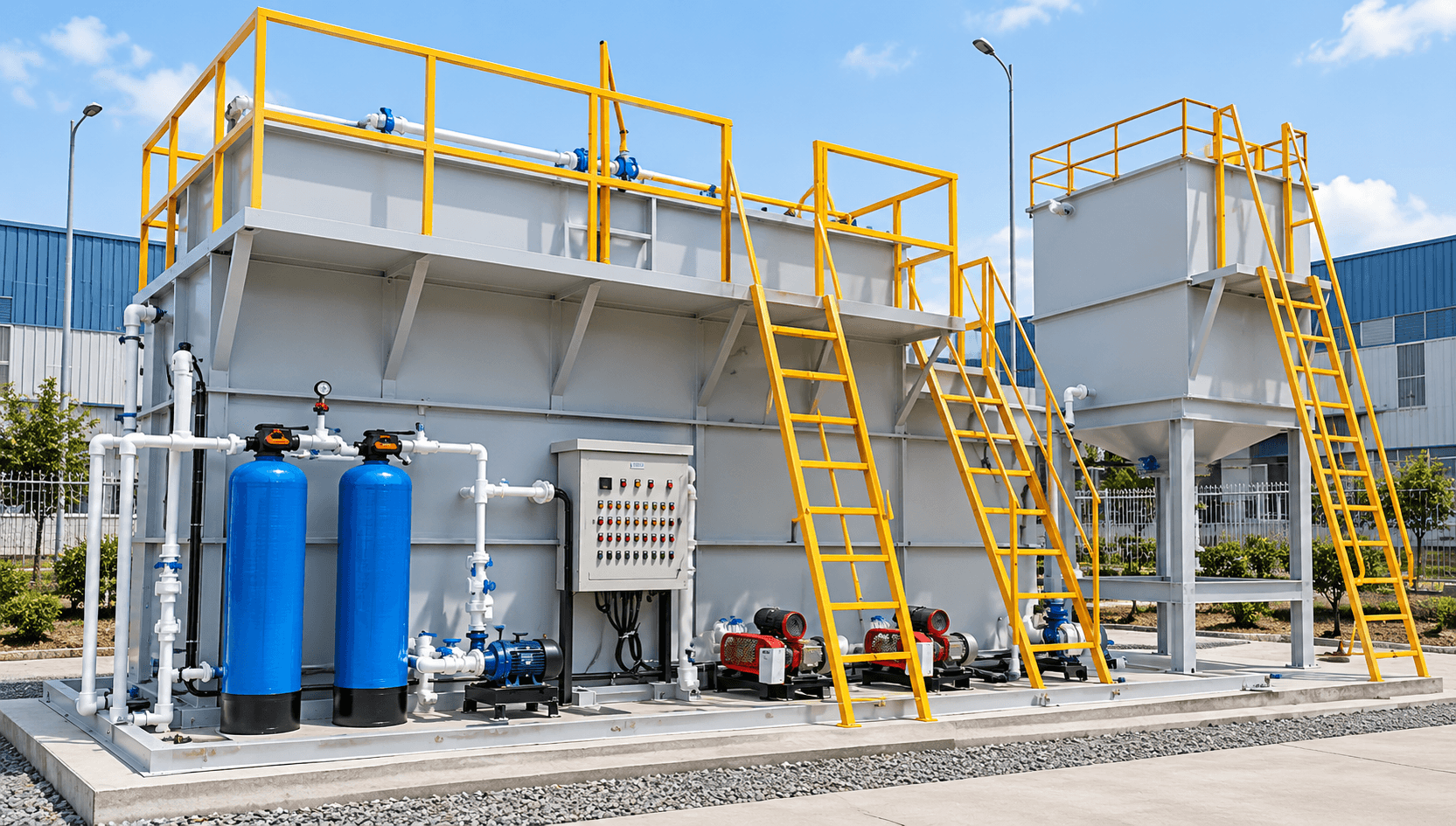
An SBR Sewage Treatment Plant treats sewage in timed cycles. Filling, biological reaction, settling and treated-water removal take place sequentially in the reactor, with the cycle planned around sewage characteristics and treatment requirements.
SBR stands for Sequencing Batch Reactor. Unlike a conventional continuous-flow system, it carries out different treatment stages one after another in the same reactor.
The same tank handles filling, biological treatment, settling and decanting at different points in the cycle.
Stage timing can be adjusted to suit plant capacity, sewage characteristics and the required treatment performance.
After solids settle, a decanter withdraws clearer water. Further filtration or disinfection may be included when required.
Preliminary treatment removes materials that may affect equipment and day-to-day operation. Some plants also include a collection or equalization tank to help manage variations in incoming flow.
Screens remove larger solids such as plastics, rags, fibres and other materials that could interfere with plant operation.
A grit-removal stage can be provided when site conditions and sewage characteristics call for it.
Fill → React → Settle → Decant → Idle. Stage durations and operating conditions are selected for the project.
Incoming sewage enters the SBR tank. Mixing or aeration may be used during filling, depending on the treatment cycle.
Activated-sludge microorganisms break down biodegradable organic matter. Aerobic and anoxic periods can be planned where required.
Aeration and mixing stop so biological solids can settle to the bottom, leaving clearer water above the sludge layer.
A decanter withdraws clearer water while minimising disturbance to settled sludge. Additional treatment may follow if needed.
The reactor may pause before filling starts again. Excess sludge is removed periodically as part of normal operation.
Aeration and mixing are adjusted as the SBR cycle progresses. The exact sequence depends on sewage characteristics and the required treatment quality.
Blowers and diffusers supply oxygen during aerobic stages so microorganisms can break down organic matter.
Mixing may continue during selected stages to keep biological solids suspended and support the intended process conditions.
Where required, aerobic periods support nitrification and anoxic periods can support denitrification.
Controls coordinate blowers, pumps, valves and decanters at the appropriate stages of the cycle.
Like other biological sewage treatment systems, an SBR produces excess sludge. Some biological solids remain in the reactor for the next cycle, while excess sludge is removed periodically to maintain operation.
Depending on plant size and configuration, removed sludge may be transferred to a holding tank before further treatment, dewatering or drying.
Sludge storage and handling should be considered alongside reactor volume, aeration, decanting and automation requirements.
SBR technology can be considered for facilities generating domestic sewage. Capacity and cycle operation should be planned around flow, site conditions and treated-water requirements.
Apartments, housing complexes, gated communities and townships.
Hotels, resorts and facilities with guest and service areas.
Hospitals and healthcare centres, planned around their sewage profile.
Schools, colleges, universities, offices and commercial complexes.
Government buildings, institutions and shopping malls.
Airports and municipal sewage treatment projects.
Both systems use microorganisms to treat sewage. Their main difference is how treatment, settling and treated-water removal are arranged.
| Feature | Conventional Activated Sludge STP | SBR STP |
|---|---|---|
| Operation | Generally continuous | Sequential batch cycles |
| Biological treatment | In a biological reactor | In the SBR reactor |
| Settling | Usually in a separate secondary clarifier | In the same reactor |
| Treated-water removal | Flows from the clarifier | Controlled decant stage |
| Aeration | Controlled during biological treatment | Controlled according to cycle |
| Nitrogen removal | Possible with suitable process design | Possible with suitable cycle conditions |
| Automation | Can be automated | Commonly uses automated cycle control |
The preferred process depends on project requirements, site conditions and operating needs. Neither system is automatically right for every application.
The reactor size, equipment selection and cycle timing depend on the actual site and treatment objective. An equalization tank or additional treatment may also be required based on incoming flow and reuse needs.
Daily flow and variations throughout the day.
Type of sewage and required treatment quality, including nitrogen removal if needed.
Available space for the reactor, tanks and equipment.
Aeration, mixing, decanting and required automation level.
Sludge removal, holding and further handling arrangements.
Whether water will be reused and if additional treatment is required.
Plant planning considers sewage quantity, treatment requirements and installation space to develop an SBR arrangement suited to the project.
Quick answers to common questions about SBR operation, treated-water reuse and maintenance planning.
Yes. Aeration is generally required during aerobic stages to supply oxygen for biological treatment. It can be adjusted or stopped during other stages depending on the treatment objectives and cycle design.
An SBR can be designed with aerobic and anoxic periods to support nitrification and denitrification. Cycle conditions should be selected to match the sewage characteristics and required treatment performance.
Treated water may be reused when its quality meets the requirements for the intended use. Possible non-potable uses include toilet flushing, gardening and floor washing. Filtration or disinfection may be required.
In some cases. Feasibility depends on tank condition and dimensions, hydraulic capacity, available volume, equipment arrangement and treatment requirements. An engineering assessment is needed before deciding.
Yes. Excess biological sludge is produced and must be removed periodically and managed through suitable storage, treatment, dewatering or disposal arrangements.
Whether you are planning an STP for an apartment, hotel, hospital or commercial building, Shivsu Watec can help you explore an SBR solution suited to your site and sewage treatment needs.