Advanced Water & Wastewater Engineering
Engineered sewage and wastewater treatment plant
MEMBRANE BIOREACTOR • STP

MBR

SEWAGE TREATMENT PLANT

Biological treatment with membrane-based solids separation.

An MBR Sewage Treatment Plant combines biological treatment with membrane filtration to help achieve consistent treated-water quality. Shivsu Watec develops project-specific systems around sewage characteristics, available space and water-reuse objectives.

Membrane Filtration
Compact Plant Arrangement
Water Reuse Potential
Controlled Solids Separation
01 • THE TECHNOLOGY

What Is an MBR Sewage Treatment Plant?

BIOLOGICAL REACTOR
TREATED WATER / PERMEATE

An MBR plant combines biological wastewater treatment and membrane filtration in one treatment arrangement.

Microorganisms break down organic matter in the sewage. Instead of relying on a conventional secondary clarifier for solid-liquid separation, microfiltration or ultrafiltration membranes retain biological solids while allowing treated water to pass through.

The resulting permeate can be discharged or considered for non-potable reuse when it meets the relevant water-quality and regulatory requirements. Excess biological sludge still needs to be removed and managed.

Microorganisms break down organic matter
Membranes retain biological solids
Permeate is collected as treated water
Treated water may be considered for reuse
02 • TREATMENT PROCESS

Inside the MBR Treatment Process

Screening and biological treatment prepare the sewage for membrane separation, followed by treated-water collection and sludge management.

01

SCREENING

Removes plastics, rags, fibres, grit and larger material before it reaches the treatment process.

02

FLOW EQUALIZATION

Balances changes in incoming sewage flow where an equalization tank is required.

03

BIOLOGICAL TREATMENT

Microorganisms consume and break down organic matter; aerobic and anoxic zones may be used as required.

04

MEMBRANE FILTRATION

Microfiltration or ultrafiltration membranes retain biological solids while treated water passes through.

05

TREATED WATER COLLECTION

Permeate is collected for discharge or assessment for non-potable reuse against applicable standards.

06

SLUDGE MANAGEMENT

Excess biological sludge is removed and managed as part of normal plant operation.

03 • PROJECT SUITABILITY

When Should You Choose MBR?

The main reason is the way the treated water is separated from the biological solids.In a conventional biological treatment plant, the solids have to settle in a clarifier. An MBR does not depend on this settling step. The membrane acts as the separation barrier.This gives the plant tighter control over suspended solids in the treated water and allows a high concentration of microorganisms to be maintained inside the biological reactor.For some projects, that can also mean a more compact plant layout.So, MBR is not simply a different type of STP. It is a different way of handling the separation stage after biological treatment.

There is no single reason why a project chooses MBR.Sometimes the available space is limited. In other projects, the treated water needs to meet a higher quality requirement or is planned for reuse.

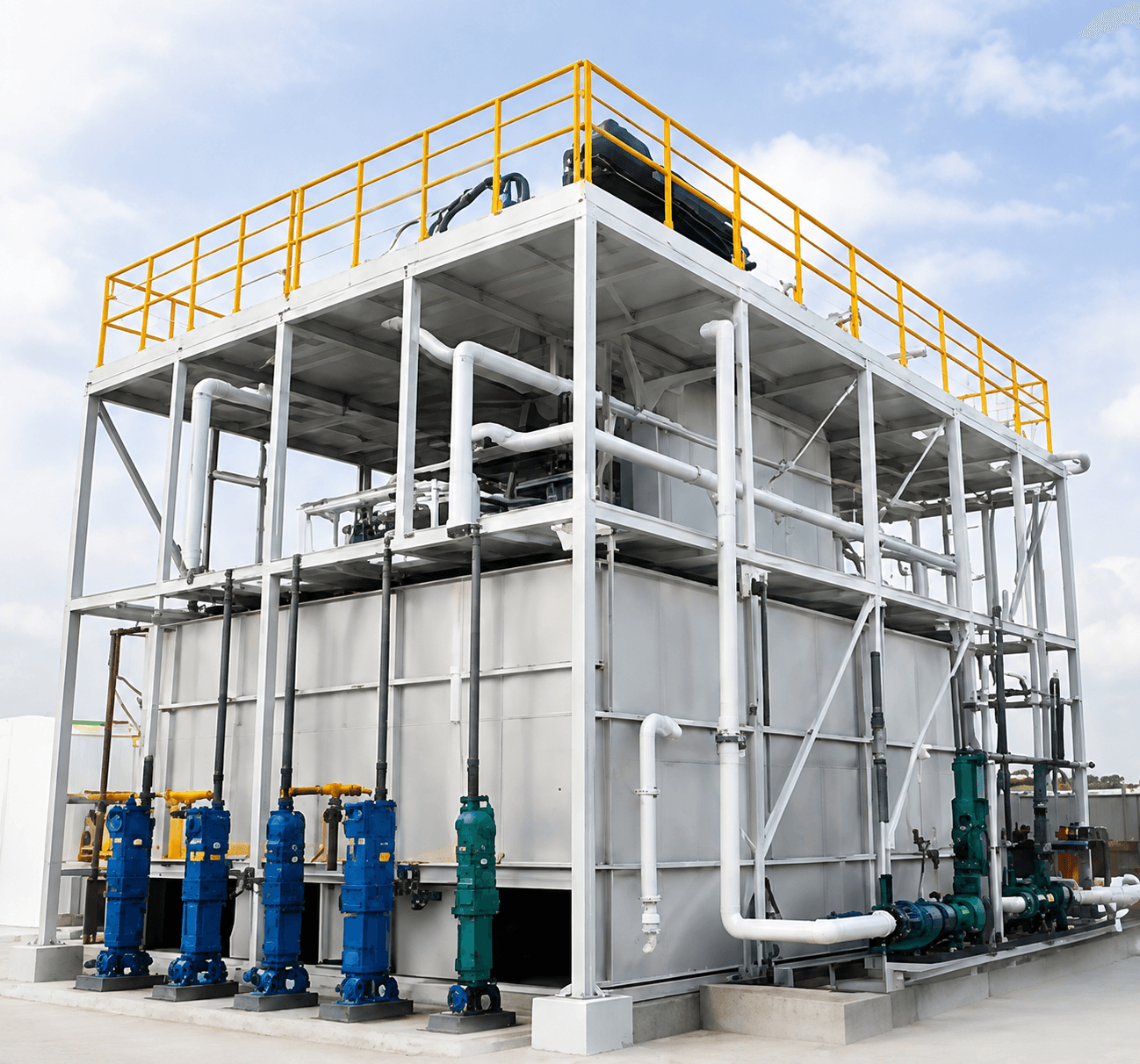
Why Consider an MBR STP?

  • Available space for the STP is limited
  • Low suspended solids are required in treated water
  • Treated water is planned for non-potable reuse
  • Good separation of biological solids is important
  • A higher level of process control is required
  • A compact treatment arrangement is preferred

What Needs to Be Checked?

  • Average and peak sewage flow
  • BOD, COD, total suspended solids and pH
  • Nitrogen treatment requirements
  • Variation in sewage flow and characteristics
  • Available site space and layout
  • Required treated-water quality and reuse target
  • Sludge handling and disposal requirements
  • Applicable discharge or reuse standards
04 • OPERATION & MAINTENANCE

MBR Membrane Fouling: Causes, Effects and Prevention

Solids and other substances can accumulate on the membrane surface over time. This fouling can make water pass through less easily, affect permeability and increase operating requirements.

Proper pretreatment, biological process control, membrane aeration, monitoring and planned cleaning all help support reliable operation. The maintenance approach should match the actual plant conditions.

Membrane aeration

Supports membrane operation and helps control the build-up of material on the membrane surface.

Operating-condition monitoring

Track membrane performance and permeability so changes can be identified.

Planned cleaning

Cleaning method and frequency depend on the membrane type, sewage and operating conditions.

Membrane cleaning frequency should be determined from operating data and membrane supplier guidance, not assumed to be the same for every plant.

05 • APPLICATIONS

Where Can an MBR STP Be Used?

01

Residential developments and housing projects

02

Commercial buildings, malls and large spaces

03

Hotels and resorts

04

Hospitals and healthcare facilities

05

Schools and educational campuses

06

Corporate, government and institutional facilities

07

Airports and transport facilities

08

Municipal sewage treatment projects

06 • SYSTEM COMPARISON

MBR vs Conventional Sewage Treatment

Both systems use microorganisms. The key difference is how biological solids are separated from treated water.

FeatureConventional Biological STPMBR STP
Biological treatmentYesYes
Main separation methodSecondary clarifierMembrane filtration
Solid separationDepends on settling performanceMembrane barrier retains biological solids
Suspended solids in treated waterDepends on clarifier performanceGenerally very low
Biomass retentionSettling and sludge returnHigh biomass retention through membranes
Space requirementDepends on plant configurationCan be more compact in many configurations
Water reuse potentialDepends on final treatmentSuitable where treated-water quality meets requirements
Process controlDepends on system designTighter control of the separation stage
07 • WATER REUSE

How MBR Supports Water Reuse

The membrane stage helps retain biological solids and can produce treated water suitable for consideration in non-potable reuse applications. Suitability depends on water-quality analysis and the applicable requirements.

Where further recycling is required, additional treatment can be considered based on the intended use and target water quality.

Potential Non-Potable Uses

Toilet flushing
Gardening and landscaping
Cooling tower make-up
Floor washing
Equipment washing
Other suitable non-potable applications
Reuse applications must be confirmed against treated-water quality and applicable local standards.
08 • FAQ

Frequently Asked Questions

Common considerations when planning an MBR sewage treatment plant.

The right system depends on sewage flow and characteristics, available space, required treated-water quality and intended reuse. These factors should be considered during design rather than selecting a system based only on capacity.

Solids and other substances can build up on membrane surfaces over time. Cleaning helps restore membrane performance. The method and frequency depend on the sewage, membrane type and operating conditions.

MBR can offer a more compact arrangement in many configurations because membrane filtration replaces the conventional clarification step. The actual footprint depends on capacity, equipment and site layout.

Yes. Biological treatment produces excess sludge that must be removed and managed as part of plant operation.

Routine care includes monitoring membrane performance, aeration and operating conditions, along with cleaning when required. Maintenance needs vary by sewage characteristics, membrane technology and plant capacity.

It may be suitable for non-potable uses such as toilet flushing, landscaping or floor washing, provided the treated water meets the relevant quality and regulatory requirements.

PLAN YOUR TREATMENT SYSTEM

Looking for the Right MBR STP for Your Project?

From sewage flow and available space to treated-water quality and reuse requirements, an MBR system needs to be planned around your site.