
Good Biological Treatment
Carrier media provide a surface for microorganisms to grow inside the reactor, helping maintain the biological population needed to treat sewage.
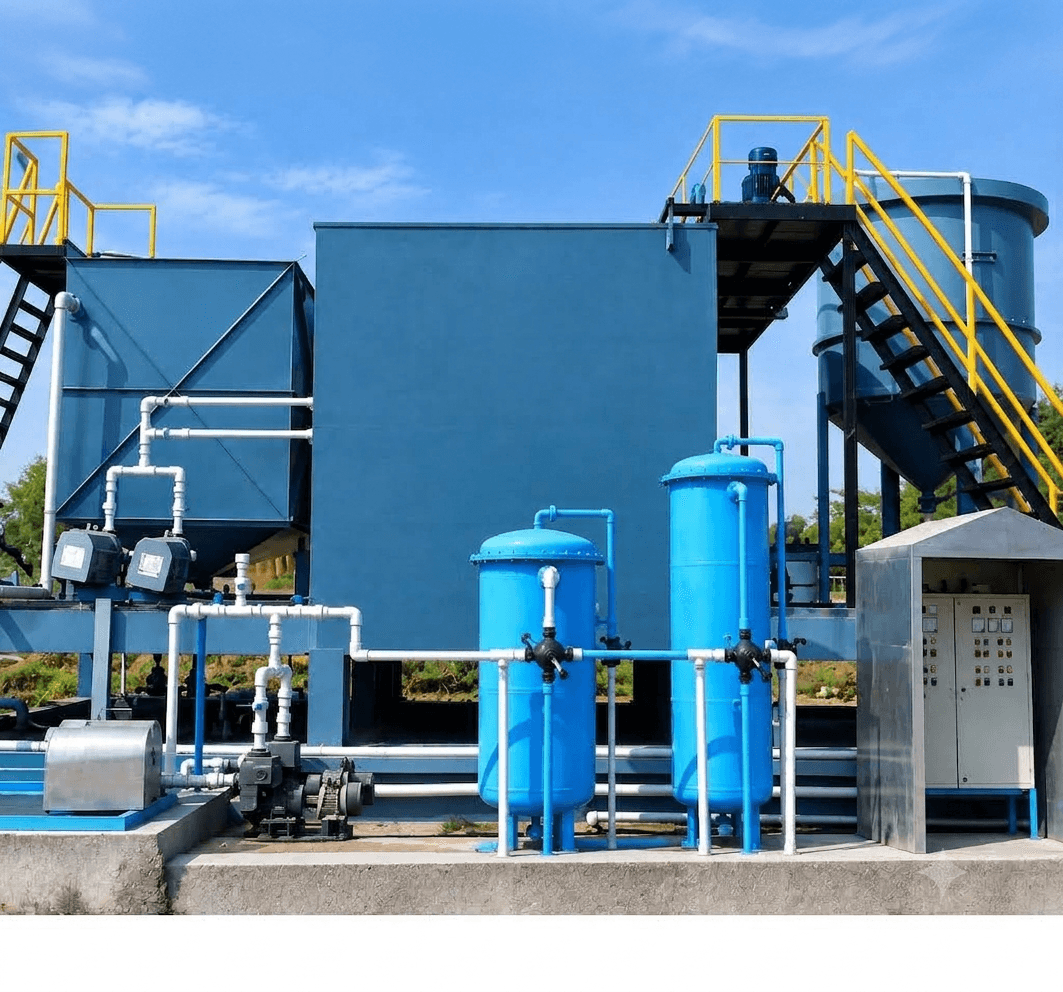
Shivsu Watec MBBR Sewage Treatment Plants use moving biofilm carrier media for biological treatment of industrial wastewater, with compact reactor configurations designed around wastewater characteristics and treatment objectives.
An MBBR Sewage Treatment Plant is an industrial wastewater treatment system that uses the Moving Bed Biofilm Reactor process as its biological treatment stage.
The reactor contains specially designed floating bio-carrier media that provide a large surface area for microorganisms to grow and form a biological film. As wastewater moves through the reactor, microorganisms break down biodegradable organic matter and help reduce pollutants such as BOD. Depending on the system design, the process can also support nitrogen removal.
Aeration keeps the carriers continuously moving through the wastewater while supplying oxygen required for aerobic biological activity.
An MBBR STP combines biological treatment using moving carrier media with downstream solid-liquid separation and, where required, additional treatment and disinfection.
Screening removes plastics, rags, fibres and other coarse solids that could interfere with downstream equipment.
Sewage is collected and, where required, equalization helps manage variations in flow and sewage characteristics.
Carrier media provide a surface for microbial growth while aeration supplies oxygen and keeps the media moving.
Aerobic stages support biological oxidation and, where required, nitrification; anoxic stages can be included for nitrogen removal.
Biological solids are separated from treated water through a secondary clarifier or another suitable solid-liquid separation unit.
Where required, filtration or other polishing processes can further improve treated-water quality.
UV, chlorination or another suitable method can be provided before discharge or reuse where required.
Final treated water is collected for discharge or suitable non-potable applications based on applicable requirements.
Biological solids are managed through an appropriate sludge-handling system, with excess sludge removed for further handling and disposal.
Carrier media provide a surface for microorganisms to grow inside the reactor, helping maintain the biological population needed to treat sewage.
Carrier media provide a large effective biological surface area within the tank, helping keep the biological treatment stage relatively compact.
Microorganisms grow on the carrier media while sewage flows through the reactor. Air is supplied where aerobic treatment is required, supported by proper design and process control.
MBBR systems can be configured for different sewage characteristics and treatment objectives. Additional biological stages can be incorporated when nitrogen removal is required.
MBBR does not rely on membranes for its main solid-liquid separation stage, unlike MBR systems, which use membrane filtration.
MBBR can be designed for building-level sewage treatment plants, institutional facilities and larger municipal projects according to flow and treatment requirements.
MBBR can be considered when an existing sewage treatment plant needs additional biological treatment capacity, depending on available space and site conditions.
Shivsu Watec's MBBR Sewage Treatment Plants can be designed for a wide range of domestic sewage treatment applications.
The appropriate MBBR configuration depends on sewage flow, sewage characteristics, treatment objectives, available space, required treated-water quality, and intended reuse application.
| Feature | Conventional Activated Sludge STP | MBBR STP |
|---|---|---|
| Biological treatment | Yes | Yes |
| Microbial growth | Mainly suspended growth | Primarily biofilm growth on carrier media |
| Carrier media | Generally not used | Used in MBBR reactor |
| Aeration | Used where required | Used in aerobic MBBR stages |
| Solid-liquid separation | Secondary clarifier | Secondary clarifier or suitable separation unit |
| Biological surface area | Provided by suspended biomass | Increased through carrier media |
| Process configuration | Conventional biological process | Moving-bed biofilm process |
| Plant footprint | Depends on process design | Can be compact depending on design |
| Nitrogen removal | Possible | Possible with appropriate aerobic/anoxic configuration |
| Automation | Can be automated | Can be automated |
Systems are designed around sewage characteristics, treatment capacity, site conditions, treatment objectives, available space and intended treated-water use.
The biological reactor uses moving carrier media to support microorganism growth as biofilm.
Process configuration is developed with attention to the available site space and complete plant requirements.
Plant configuration can include automation and monitoring appropriate to the project requirements.
Where required, treated water can be integrated with suitable non-potable reuse applications.
Support focuses on process selection and system engineering through installation and commissioning.
Answers based on the MBBR STP content and application considerations provided by Shivsu Watec.
The main difference is the way the two systems handle treated water and solids. MBBR uses moving carrier media for biological treatment and normally uses a clarifier for solid separation. MBR also uses biological treatment, but membrane filtration is used for the main solid-liquid separation.
Yes. MBBR can be used for sewage from apartments, hotels, hospitals, offices, institutions and municipal projects. However, the system configuration depends on flow, sewage quality, available space and required treated-water quality.
A conventional MBBR system normally needs a solid-liquid separation stage after biological treatment. A secondary clarifier is commonly used for this purpose, although the exact arrangement depends on the overall STP design.
In some cases, an existing biological treatment system can be upgraded using MBBR technology. Feasibility depends on existing tank capacity, sewage characteristics, available space and required treatment performance.
Air is supplied through blowers and diffusers installed in the biological tank. This provides oxygen for microorganisms and helps keep the carrier media moving.
Your wastewater treatment system should be designed around your actual process, wastewater characteristics and treatment goals. Share your requirement and discuss the right MBBR STP configuration for your application.